
Mold Remediation in Dallas, Texas
Certified mold remediation to safely remove mold colonies and address the moisture source in Texas homes and businesses.
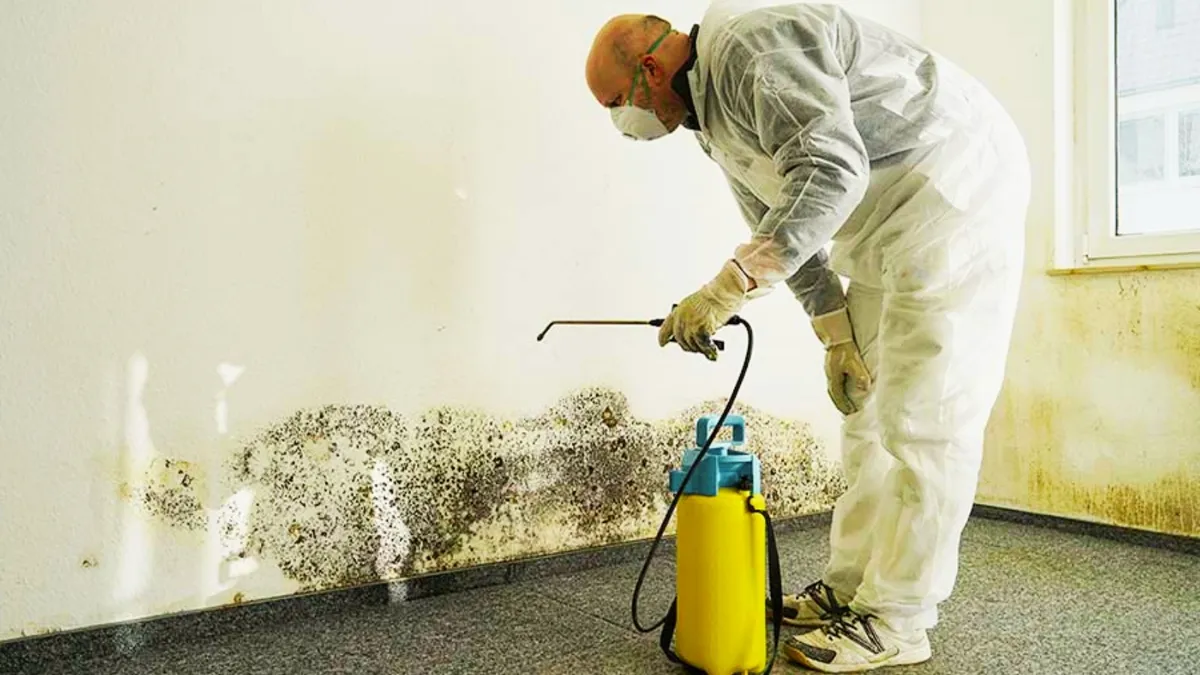
Mold Remediation in Dallas
Mold needs only moisture, warmth, and time to establish itself — conditions that are common after any water intrusion, in humid climates, or in poorly ventilated spaces. Once established, mold can spread through wall cavities, HVAC systems, and porous materials. That holds true for homeowners and businesses in Dallas, Texas as much as anywhere else in the state.
Our technicians handle this work across Dallas regularly. Mold remediation is the process of safely removing mold colonies, addressing the moisture source that allowed them to grow, and preventing the problem from returning.
Dallas sits in Dallas County, part of Texas's North Texas region, not far from Addison, Balch Springs, Carrollton, Cedar Hill. Older urban cores across the region carry sewer laterals that have been in the ground for decades.
Nights, weekends, and holidays are all covered. A Dallas call reaches someone who can dispatch a technician rather than an answering service taking a message for the morning.
No matter what led to the damage, our job is the same every time: reach your Dallas property fast and explain each step clearly as we go.
What To Do Right Now
The steps that limit damage, and the reactions that commonly make it worse.
Do This Now
- Stop the water source if you can identify it, since growth continues as long as the material stays wet
- Close doors to the affected room and keep the area undisturbed until it can be assessed
- Keep children, older adults, and anyone with asthma or a compromised immune system out of the space
- Turn off the HVAC system if growth is near a vent, a return, or inside ductwork
- Photograph the growth and any water staining around it before anything is cleaned or moved
- Note when you first saw it and what happened before, because that history often identifies the source
Avoid Doing This
- ×Do not scrub, brush, or dry-wipe visible mold, which releases large numbers of spores into the air
- ×Do not point a fan at the growth or open windows to air the room out, since both spread spores through the building
- ×Do not paint or seal over mold, which hides the growth while it continues underneath
- ×Do not rely on household bleach on porous materials such as drywall and bare wood, because it does not reach growth below the surface
- ×Do not tear out walls or flooring yourself without containment, as uncontrolled demolition is how a contained problem becomes a building-wide one
- ×Do not ignore a musty smell because nothing is visible, since the odor usually means growth inside a cavity
How To Tell You Need This Service
Problems This Service Solves
These are the problems a Dallas property tends to develop when mold remediation is put off, and each one costs more to resolve than the one before it:
- Visible mold growth on walls, ceilings, or surfaces
- Musty odors indicating hidden mold growth
- Health irritation for sensitive individuals
- Spreading mold through HVAC systems
- Underlying moisture issues that allow regrowth
When You Need This Service
Dallas property owners typically call us for mold remediation in situations like these. If any of them sound familiar, it is worth having a technician take a look:
- Visible mold appears on walls, ceilings, or other surfaces
- A musty odor is present without visible mold
- Mold develops after a water damage event
- A mold inspection confirms elevated mold levels
What Happens While You Wait
Damage progresses on its own schedule. This is roughly how it unfolds.
Growth Establishes
Given moisture and ordinary room temperature, mold can begin establishing on building materials within roughly 24 to 48 hours. At this point nothing is visible and the only clue is often that something still feels damp.
Visible Colonization
Colonies become visible on surfaces and the characteristic musty odor develops. Drywall paper, wood framing, and insulation all support growth, and the area affected expands outward from the wettest point.
Spread Through Cavities
Growth moves through wall and ceiling cavities along the moisture, and spores entering a return vent are distributed through the HVAC system to rooms that had no water problem at all.
Material and Structural Damage
Mold digests the material it grows on. Drywall loses integrity, wood framing and subfloor soften and weaken, contents and stored belongings become unsalvageable, and remediation scope expands well past the original wet area.
Expect the work at your Dallas property to run in phases rather than as one continuous push: assessment first, then the active mitigation stage where equipment is in place and monitored, then repairs once readings confirm it is appropriate to close up. Each phase has its own length, and your technician updates the estimate as the readings come in rather than holding to a number set on day one.
Our Process in Dallas
Here is what our technicians typically do once they arrive at a Dallas property, step by step rather than skipping ahead:
- 1
Inspection
Our technician identifies the extent of mold growth and the moisture source feeding it.
- 2
Containment
The affected area is contained to prevent mold spores from spreading during remediation.
- 3
Mold Removal
Mold-affected materials are safely removed or treated using appropriate techniques.
- 4
Cleaning & Air Treatment
Surfaces and air are treated to address remaining spores.
- 5
Moisture Correction
The underlying moisture source is addressed to help prevent mold from returning.
The Equipment We Bring
Our technicians arrive at every Dallas job with the equipment the situation actually calls for rather than a generic kit: moisture meters and thermal cameras to find out how far damage has spread, extraction and drying equipment sized to the property, and the protective gear needed for anything involving contamination or biohazard material. The specific tools vary by job, but the goal stays the same. Assess accurately before starting work, then use the right equipment instead of guessing. That upfront assessment is also what keeps a Dallas job from turning into a longer, more expensive one than it needed to be.
What's Included
Here is the scope our technicians cover on a mold remediation job in Dallas, written out so there is nothing to discover later:
- Mold containment and removal
- Treatment of affected surfaces
- Air quality treatment
- Moisture source guidance
- Repair of materials removed during remediation
Mold Remediation in Dallas, Texas
Older urban cores across the region carry sewer laterals that have been in the ground for decades. Clay and cast iron lines crack and admit tree roots over time, and the resulting backups push wastewater into the lowest fixtures in a building rather than draining away. That is the backdrop for any mold remediation work in Dallas County.
We provide mold remediation not only in Dallas but across the surrounding Dallas County area, including Addison, Balch Springs, Carrollton, Cedar Hill. Wherever you are located in this part of Texas, the same licensed, insured technicians handle your call.
Seasonal conditions matter here as much as anywhere in the state. North Texas sits in one of the state's most hail-prone corridors, with severe thunderstorms common in spring and early summer. Hail and high wind can damage roofing and siding in minutes, and the resulting leaks often go unnoticed until water has already reached drywall and flooring.
Property Types We Serve in Dallas
Whether it is a Dallas homeowner dealing with a single affected room or a local business managing a larger loss, the same licensed technicians handle the job. Commercial properties sometimes add layers like coordinating with multiple tenants, a property management company, or a different insurance process, and our technicians are used to working within those constraints without slowing the restoration work down.
Our Service Area Around Dallas
Our technicians cover Dallas County as a whole. Rural addresses, properties on county roads, and homes between towns all fall inside the service area, and none of them are treated as a lower priority than a job in the center of Dallas. The equipment that arrives is the same either way.
Who Shows Up at Your Property
The technicians we send to Dallas are licensed and insured, and mold remediation is work they do routinely rather than occasionally. That matters because a lot of what determines how well a restoration job goes comes from doing the job regularly: knowing when a material can be saved versus needs replacing, spotting moisture a meter alone might miss, sequencing the work so nothing is re-damaged mid-project. We would rather send a technician who has handled dozens of similar jobs than one improvising from a manual.
Working With Your Carrier
Your policy, not us, decides what is covered at your Dallas property. What we control is the quality of the record: photographs taken before work begins, daily readings logged at fixed points, an itemized list of materials removed, and scope documentation your adjuster can verify independently. Claims that move smoothly are almost always the ones backed by that kind of evidence. Flood and sewer backup are commonly separate from base coverage, so check those specifically.
How We Keep You Informed
We try to keep communication simple throughout a Dallas job: you will know when the technician is arriving, what they find once they are there, and what the plan is before any work beyond the initial assessment begins. If something changes mid-job, whether that is more damage than expected or a material that cannot be saved, you will hear it directly from the technician rather than finding out after the fact.
Why Dallas Chooses Us
We are a licensed, insured restoration company rather than a dispatch service, which is the distinction that matters most to Dallas property owners. The crew that arrives, the equipment it brings, and the documentation you receive all come from the same company you called.
Clarity is most of what people want in this situation. At a Dallas property you get a written scope rather than a verbal estimate that drifts, readings you can see rather than an assurance that things are drying, and a straight answer when something changes mid-job.
A Dallas job does not end when the visible damage is handled. Our technicians check for the follow-on issues that are easy to miss, including lingering moisture, an odor that has not fully cleared, and a repair that needs a second look, before calling the job done.
Nearby Areas We Serve
If your property is outside Dallas itself, these nearby areas are covered by the same technicians:
Other Services We Provide in Dallas
Mold Inspection & Testing
Our technicians cover mold inspection in Dallas too. Professional mold inspection and testing to identify hidden mold growth and air quality issues in Texas properties.
Crawl Space Mold Removal
Our technicians cover crawl space mold removal in Dallas too. Targeted mold removal and moisture control for crawl spaces, a common problem area in humid Texas climates.
Water Damage Restoration
Our technicians cover water damage restoration in Dallas too. Rapid water extraction, structural drying, and full restoration after a leak, storm, or flood damages your Texas property.
Dallas Mold Remediation FAQ
Is all mold dangerous in Dallas?
Mold can cause health irritation for some people, especially those with allergies, asthma, or weakened immune systems. Any significant mold growth should be addressed.
Is mold remediation covered by homeowners insurance in Texas?
Coverage varies by policy and cause. Mold resulting from a sudden covered event (like a pipe burst) is more likely to be covered than mold from long-term neglect. Check your policy.
How long does mold remediation take?
Typically a few days to a week depending on the extent of mold growth and affected area.
Will mold come back after remediation?
If the underlying moisture source is properly addressed, the risk of regrowth is significantly reduced.
Do I need a mold inspection before remediation?
An inspection helps confirm the extent of the problem and guide the remediation plan, though visible, confirmed mold can sometimes move straight to remediation.
Do you provide mold remediation in Dallas, Texas?
Yes, Dallas is inside our service area. Licensed, insured technicians handle mold remediation there and the rest of Dallas County, any day of the year.
How quickly can a technician reach my property in Dallas?
We dispatch as soon as we understand the situation. Exact timing depends on current call volume and your specific location, so we give you a realistic window on the call rather than a blanket promise.
Do you also serve areas near Dallas, like Addison?
Addison, Balch Springs, Carrollton, Cedar Hill are all inside our coverage area, along with the smaller communities between them.
Are your Dallas technicians licensed and insured?
They are. Licensing and insurance are confirmed before a technician is assigned to any Dallas job, and you are entitled to see that documentation on request.
What should I do before your technician arrives in Dallas?
Stop the source if you safely can, stay out of rooms with sagging ceilings or standing water near outlets, and photograph the damage for your claim. We walk you through anything else specific to your situation while you are still on the phone.
Is there a fee just to have someone look at my Dallas property?
We provide a free estimate as part of the initial visit. You will know the plan and scope before any work begins, with no obligation to proceed if you would rather get a second opinion.
Do you work on commercial properties in Dallas, or just homes?
Homes and businesses alike. The method is the same; what changes is scheduling, access, and the documentation standard a commercial carrier expects.
What if the damage at my Dallas property is worse than expected?
Hidden damage is the norm rather than the exception in this work. Any expansion of scope gets explained and approved before the work happens, and the readings behind that decision are documented for you and your adjuster.
Whatever stage you are at with this, calling gets you a clear picture rather than a sales pitch. We will tell you what we think you are looking at, what it would take to address it, and whether it needs attention today or can reasonably wait. For a Dallas property, that conversation is free and carries no obligation.
Dealing With Mold Remediation in Dallas?
Call any hour for a licensed technician, a free assessment, and a written scope before any work starts.
Call Now — (866) 370-1338