
Mold Remediation in Panhandle, Texas
Certified mold remediation to safely remove mold colonies and address the moisture source in Texas homes and businesses.
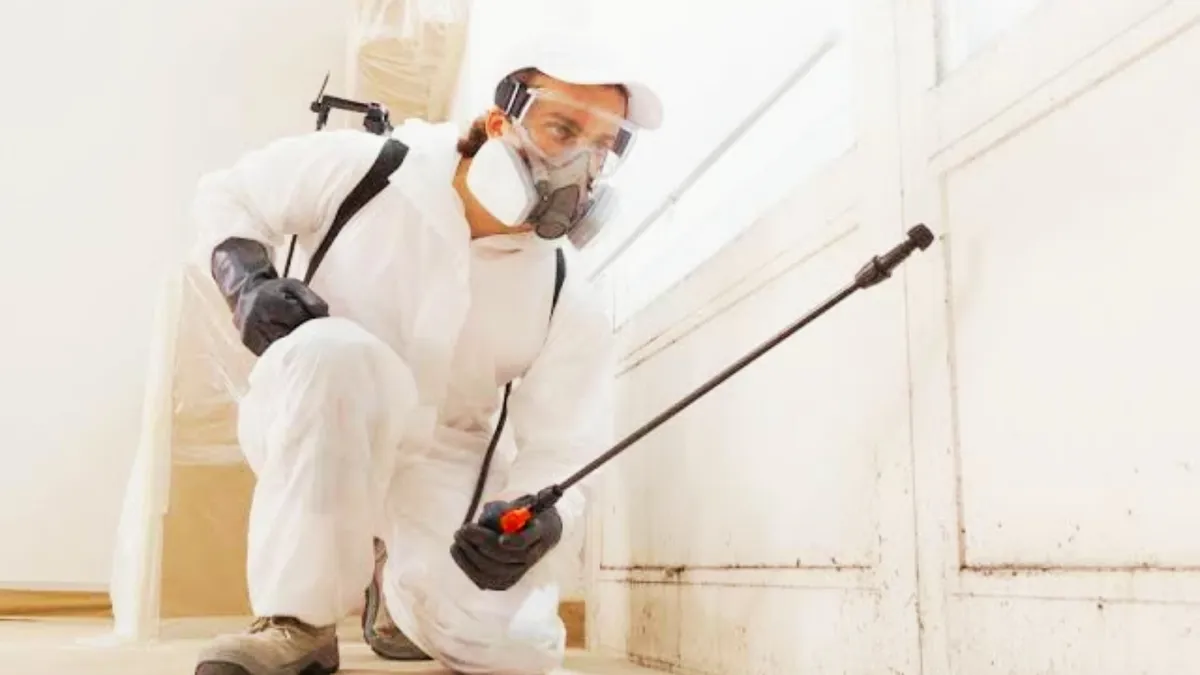
Mold Remediation in Panhandle
Mold needs only moisture, warmth, and time to establish itself — conditions that are common after any water intrusion, in humid climates, or in poorly ventilated spaces. Once established, mold can spread through wall cavities, HVAC systems, and porous materials. In Panhandle, the gap between noticing the problem and calling someone is where most of the avoidable damage happens.
Mold remediation is the process of safely removing mold colonies, addressing the moisture source that allowed them to grow, and preventing the problem from returning. The approach does not change based on whether a property sits in the middle of Panhandle or well outside it.
The Texas Panhandle sees some of the most volatile weather in the state, from severe hailstorms to sudden winter cold snaps. That is part of what shapes how we approach mold remediation for properties in Panhandle and the rest of Carson County.
There is no after-hours voicemail or next-business-day callback here. Whether it is the middle of the night or a holiday weekend, a Panhandle call for mold remediation reaches a live person who can get a technician moving.
No matter what led to the damage, our job is the same every time: reach your Panhandle property fast and explain each step clearly as we go.
What To Do Right Now
The steps that limit damage, and the reactions that commonly make it worse.
Do This Now
- Stop the water source if you can identify it, since growth continues as long as the material stays wet
- Close doors to the affected room and keep the area undisturbed until it can be assessed
- Keep children, older adults, and anyone with asthma or a compromised immune system out of the space
- Turn off the HVAC system if growth is near a vent, a return, or inside ductwork
- Photograph the growth and any water staining around it before anything is cleaned or moved
- Note when you first saw it and what happened before, because that history often identifies the source
Avoid Doing This
- ×Do not scrub, brush, or dry-wipe visible mold, which releases large numbers of spores into the air
- ×Do not point a fan at the growth or open windows to air the room out, since both spread spores through the building
- ×Do not paint or seal over mold, which hides the growth while it continues underneath
- ×Do not rely on household bleach on porous materials such as drywall and bare wood, because it does not reach growth below the surface
- ×Do not tear out walls or flooring yourself without containment, as uncontrolled demolition is how a contained problem becomes a building-wide one
- ×Do not ignore a musty smell because nothing is visible, since the odor usually means growth inside a cavity
How To Tell You Need This Service
Problems This Service Solves
These are the problems a Panhandle property tends to develop when mold remediation is put off, and each one costs more to resolve than the one before it:
- Visible mold growth on walls, ceilings, or surfaces
- Musty odors indicating hidden mold growth
- Health irritation for sensitive individuals
- Spreading mold through HVAC systems
- Underlying moisture issues that allow regrowth
When You Need This Service
Panhandle property owners typically call us for mold remediation in situations like these. If any of them sound familiar, it is worth having a technician take a look:
- Visible mold appears on walls, ceilings, or other surfaces
- A musty odor is present without visible mold
- Mold develops after a water damage event
- A mold inspection confirms elevated mold levels
What Happens While You Wait
Damage progresses on its own schedule. This is roughly how it unfolds.
Growth Establishes
Given moisture and ordinary room temperature, mold can begin establishing on building materials within roughly 24 to 48 hours. At this point nothing is visible and the only clue is often that something still feels damp.
Visible Colonization
Colonies become visible on surfaces and the characteristic musty odor develops. Drywall paper, wood framing, and insulation all support growth, and the area affected expands outward from the wettest point.
Spread Through Cavities
Growth moves through wall and ceiling cavities along the moisture, and spores entering a return vent are distributed through the HVAC system to rooms that had no water problem at all.
Material and Structural Damage
Mold digests the material it grows on. Drywall loses integrity, wood framing and subfloor soften and weaken, contents and stored belongings become unsalvageable, and remediation scope expands well past the original wet area.
The honest answer on timing is that it depends on what the inspection finds. A contained problem at a Panhandle property can be worked through in a few days. Damage that reached subfloor, wall cavities, or multiple rooms takes longer, and we would rather tell you that after seeing the property than guess high or low on the phone.
Our Process in Panhandle
Here is what our technicians typically do once they arrive at a Panhandle property, step by step rather than skipping ahead:
- 1
Inspection
Our technician identifies the extent of mold growth and the moisture source feeding it.
- 2
Containment
The affected area is contained to prevent mold spores from spreading during remediation.
- 3
Mold Removal
Mold-affected materials are safely removed or treated using appropriate techniques.
- 4
Cleaning & Air Treatment
Surfaces and air are treated to address remaining spores.
- 5
Moisture Correction
The underlying moisture source is addressed to help prevent mold from returning.
The Equipment We Bring
Equipment choice follows the inspection, not the other way around. At a Panhandle property our technicians measure first, using moisture meters and thermal imaging to establish how far the problem has traveled, then bring in extraction, drying, filtration, or containment equipment sized to what the readings show. Over-equipping a small job wastes your money and under-equipping a large one leaves damage behind.
What's Included
When you call for mold remediation in Panhandle, Texas, here is what is included, with no surprise add-ons once the work is underway:
- Mold containment and removal
- Treatment of affected surfaces
- Air quality treatment
- Moisture source guidance
- Repair of materials removed during remediation
Mold Remediation in Panhandle, Texas
Conditions across the Panhandle region shape what our technicians find at Panhandle properties. Winters in the Panhandle run longer and colder than in most of Texas, and freezes here are sustained rather than overnight. Plumbing in garages, attics, and exterior walls still fails under that load, and because the line often stays frozen for days, the water releases when it thaws rather than when it split.
Our technicians work throughout Carson County, so mold remediation in Hereford, Idalou, Littlefield, Lorenzo is handled by the same crews that cover Panhandle.
Straight-line winds across open high plains terrain arrive with little to break them up. Wind lifts flashing, strips shingles, and opens the building envelope in ways that are easy to miss from the ground, and every one of those openings is a route for water during the next storm. Texas' humid Gulf Coast climate and hot, moisture-heavy summers across much of the state create favorable conditions for mold growth, particularly after water damage events or in homes with inadequate ventilation in crawl spaces, attics, and bathrooms.
Property Types We Serve in Panhandle
We handle mold remediation for both homes and businesses in Panhandle, Texas. A single-family home, a rental property, a small retail space, or a commercial building all need the same core response, but the scale and coordination differ. A commercial job in Panhandle might mean working around business hours or coordinating with a property manager, while a home typically means working directly with the owner or tenant. Our technicians adjust the approach to the property rather than the other way around.
Our Service Area Around Panhandle
City limits do not define where we work. A Panhandle address and an address several miles outside it are handled the same way, because dispatch runs on technician availability and travel distance rather than on which municipality the property happens to sit in. That matters in Carson County, where a good share of properties are outside any city boundary.
Who Shows Up at Your Property
Our technicians are licensed, insured, and assigned based on what the job actually involves. A straightforward water loss and a contaminated scene call for different experience, and we would rather send the right person to your Panhandle property than the nearest one. If you want to confirm credentials before work starts, ask, and we will provide them.
Working With Your Carrier
Your policy, not us, decides what is covered at your Panhandle property. What we control is the quality of the record: photographs taken before work begins, daily readings logged at fixed points, an itemized list of materials removed, and scope documentation your adjuster can verify independently. Claims that move smoothly are almost always the ones backed by that kind of evidence. Flood and sewer backup are commonly separate from base coverage, so check those specifically.
How We Keep You Informed
Nobody enjoys being left wondering what is happening in their own home. At a Panhandle property, our technicians tell you what they found, what it means, and what they plan to do about it before they do it. Changes to the scope get explained when they come up, and the daily readings that drive those decisions are available to you as well as to your adjuster.
Why Panhandle Chooses Us
We are a licensed, insured restoration company rather than a dispatch service, which is the distinction that matters most to Panhandle property owners. The crew that arrives, the equipment it brings, and the documentation you receive all come from the same company you called.
Clarity is most of what people want in this situation. At a Panhandle property you get a written scope rather than a verbal estimate that drifts, readings you can see rather than an assurance that things are drying, and a straight answer when something changes mid-job.
A Panhandle job does not end when the visible damage is handled. Our technicians check for the follow-on issues that are easy to miss, including lingering moisture, an odor that has not fully cleared, and a repair that needs a second look, before calling the job done.
Nearby Areas We Serve
If your property is outside Panhandle itself, these nearby areas are covered by the same technicians:
Other Services We Provide in Panhandle
Mold Inspection & Testing
Professional mold inspection and testing to identify hidden mold growth and air quality issues in Texas properties. We handle this across Panhandle and the surrounding area.
Crawl Space Mold Removal
Targeted mold removal and moisture control for crawl spaces, a common problem area in humid Texas climates. We handle this across Panhandle and the surrounding area.
Water Damage Restoration
Our technicians cover water damage restoration in Panhandle too. Rapid water extraction, structural drying, and full restoration after a leak, storm, or flood damages your Texas property.
Panhandle Mold Remediation FAQ
Is all mold dangerous in Panhandle?
Mold can cause health irritation for some people, especially those with allergies, asthma, or weakened immune systems. Any significant mold growth should be addressed.
Is mold remediation covered by homeowners insurance in Texas?
Coverage varies by policy and cause. Mold resulting from a sudden covered event (like a pipe burst) is more likely to be covered than mold from long-term neglect. Check your policy.
How long does mold remediation take?
Typically a few days to a week depending on the extent of mold growth and affected area.
Will mold come back after remediation?
If the underlying moisture source is properly addressed, the risk of regrowth is significantly reduced.
Do I need a mold inspection before remediation?
An inspection helps confirm the extent of the problem and guide the remediation plan, though visible, confirmed mold can sometimes move straight to remediation.
Do you provide mold remediation in Panhandle, Texas?
Yes. Mold remediation is one of the thirteen services we provide in Panhandle and the rest of Carson County.
How quickly can a technician reach my property in Panhandle?
Our line is answered at any hour and the nearest available crew is dispatched once we know what you are dealing with. We will not quote you a fixed number of minutes, because the honest answer varies with distance and conditions.
Do you also serve areas near Panhandle, like Hereford?
We do. Hereford, Idalou, Littlefield, Lorenzo are all within the same service area, handled by the same technicians who cover Panhandle.
Are your Panhandle technicians licensed and insured?
Yes. Every technician we send to a Panhandle property is licensed and insured, and we are happy to confirm that before work begins. We would rather answer that question upfront than have you wonder about it once work is underway.
What should I do before your technician arrives in Panhandle?
The useful steps are usually shutting off the source, keeping people out of affected rooms, and documenting the damage with photos. Starting your own cleanup rarely helps and sometimes makes the restoration harder, so there is no need.
Is there a fee just to have someone look at my Panhandle property?
The initial assessment is free and carries no obligation. You get a written scope out of it either way, which is useful even if you decide to go another direction.
Do you work on commercial properties in Panhandle, or just homes?
Both residential and commercial. Commercial work in Panhandle gets sequenced so critical areas are released first, since downtime is usually the larger loss for a business.
What if the damage at my Panhandle property is worse than expected?
That happens, especially with water and mold damage that has spread further than it first appeared. Our technicians walk you through any change in scope before doing additional work rather than surprising you after the fact.
Whatever stage you are at with this, calling gets you a clear picture rather than a sales pitch. We will tell you what we think you are looking at, what it would take to address it, and whether it needs attention today or can reasonably wait. For a Panhandle property, that conversation is free and carries no obligation.
Get Mold Remediation Started in Panhandle
Get a licensed technician headed to your Panhandle property. Free estimate, no obligation, available 24/7.
Call Now — (866) 370-1338