
Mold Remediation in Longview, Texas
Certified mold remediation to safely remove mold colonies and address the moisture source in Texas homes and businesses.
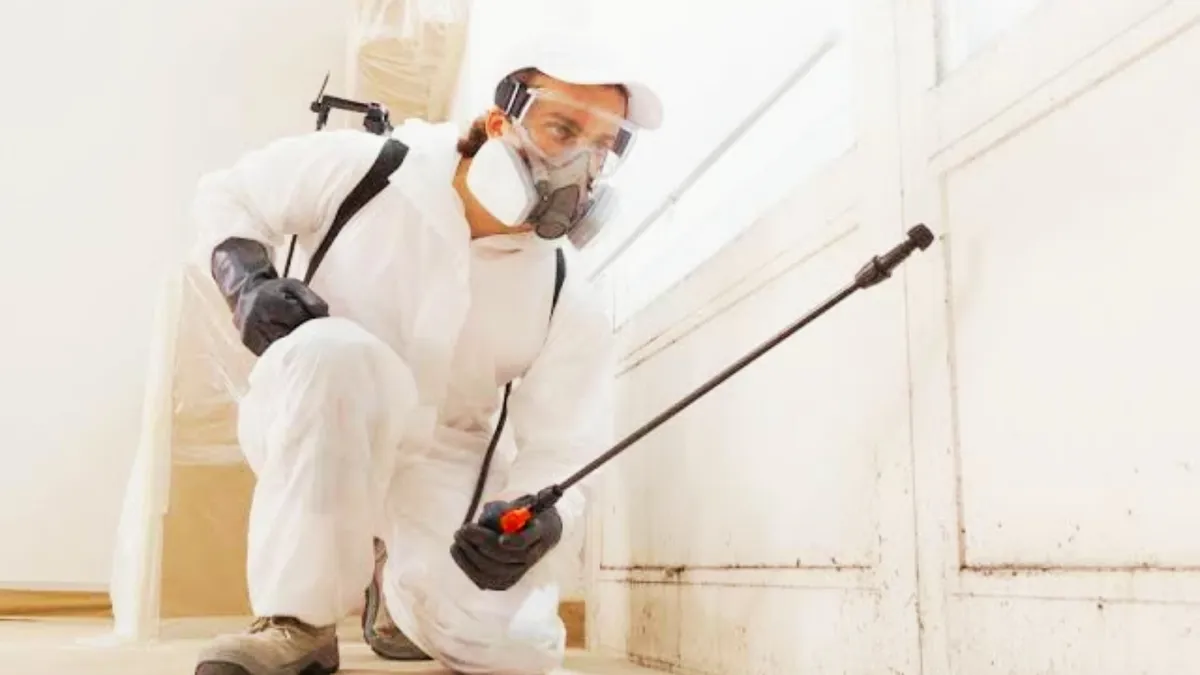
Mold Remediation in Longview
When mold remediation is needed in Longview, Texas, the first few hours matter most. Mold needs only moisture, warmth, and time to establish itself — conditions that are common after any water intrusion, in humid climates, or in poorly ventilated spaces. Once established, mold can spread through wall cavities, HVAC systems, and porous materials.
Mold remediation is the process of safely removing mold colonies, addressing the moisture source that allowed them to grow, and preventing the problem from returning. The approach does not change based on whether a property sits in the middle of Longview or well outside it.
Longview sits in Gregg County, part of Texas's East Texas region, not far from White Oak, Gladewater, Kilgore. Pier-and-beam construction with ventilated crawl spaces is common across East Texas, much of it built before modern vapor barrier practice.
Nights, weekends, and holidays are all covered. A Longview call reaches someone who can dispatch a technician rather than an answering service taking a message for the morning.
We start every Longview job the same way, by understanding what actually happened and telling you plainly what it will take to put it right.
What To Do Right Now
The steps that limit damage, and the reactions that commonly make it worse.
Do This Now
- Stop the water source if you can identify it, since growth continues as long as the material stays wet
- Close doors to the affected room and keep the area undisturbed until it can be assessed
- Keep children, older adults, and anyone with asthma or a compromised immune system out of the space
- Turn off the HVAC system if growth is near a vent, a return, or inside ductwork
- Photograph the growth and any water staining around it before anything is cleaned or moved
- Note when you first saw it and what happened before, because that history often identifies the source
Avoid Doing This
- ×Do not scrub, brush, or dry-wipe visible mold, which releases large numbers of spores into the air
- ×Do not point a fan at the growth or open windows to air the room out, since both spread spores through the building
- ×Do not paint or seal over mold, which hides the growth while it continues underneath
- ×Do not rely on household bleach on porous materials such as drywall and bare wood, because it does not reach growth below the surface
- ×Do not tear out walls or flooring yourself without containment, as uncontrolled demolition is how a contained problem becomes a building-wide one
- ×Do not ignore a musty smell because nothing is visible, since the odor usually means growth inside a cavity
How To Tell You Need This Service
Problems This Service Solves
Here is what mold remediation can lead to for a Longview property if it is not addressed quickly. None of these get easier to fix the longer they are left alone:
- Visible mold growth on walls, ceilings, or surfaces
- Musty odors indicating hidden mold growth
- Health irritation for sensitive individuals
- Spreading mold through HVAC systems
- Underlying moisture issues that allow regrowth
When You Need This Service
We hear from Longview homeowners and businesses when situations like these come up, often without much warning:
- Visible mold appears on walls, ceilings, or other surfaces
- A musty odor is present without visible mold
- Mold develops after a water damage event
- A mold inspection confirms elevated mold levels
What Happens While You Wait
Damage progresses on its own schedule. This is roughly how it unfolds.
Growth Establishes
Given moisture and ordinary room temperature, mold can begin establishing on building materials within roughly 24 to 48 hours. At this point nothing is visible and the only clue is often that something still feels damp.
Visible Colonization
Colonies become visible on surfaces and the characteristic musty odor develops. Drywall paper, wood framing, and insulation all support growth, and the area affected expands outward from the wettest point.
Spread Through Cavities
Growth moves through wall and ceiling cavities along the moisture, and spores entering a return vent are distributed through the HVAC system to rooms that had no water problem at all.
Material and Structural Damage
Mold digests the material it grows on. Drywall loses integrity, wood framing and subfloor soften and weaken, contents and stored belongings become unsalvageable, and remediation scope expands well past the original wet area.
Expect the work at your Longview property to run in phases rather than as one continuous push: assessment first, then the active mitigation stage where equipment is in place and monitored, then repairs once readings confirm it is appropriate to close up. Each phase has its own length, and your technician updates the estimate as the readings come in rather than holding to a number set on day one.
Our Process in Longview
Here is what our technicians typically do once they arrive at a Longview property, step by step rather than skipping ahead:
- 1
Inspection
Our technician identifies the extent of mold growth and the moisture source feeding it.
- 2
Containment
The affected area is contained to prevent mold spores from spreading during remediation.
- 3
Mold Removal
Mold-affected materials are safely removed or treated using appropriate techniques.
- 4
Cleaning & Air Treatment
Surfaces and air are treated to address remaining spores.
- 5
Moisture Correction
The underlying moisture source is addressed to help prevent mold from returning.
The Equipment We Bring
What shows up at a Longview job depends on what is actually needed, but our technicians are equipped to handle the full range of mold remediation situations without a second trip to grab the right tool. That includes diagnostic equipment to confirm the extent of the problem up front, which helps avoid both under-treating a bigger issue and over-treating a smaller one. For Longview properties specifically, that means the first visit is usually enough to put together an accurate plan.
What's Included
When you call for mold remediation in Longview, Texas, here is what is included, with no surprise add-ons once the work is underway:
- Mold containment and removal
- Treatment of affected surfaces
- Air quality treatment
- Moisture source guidance
- Repair of materials removed during remediation
Mold Remediation in Longview, Texas
Conditions across the East Texas region shape what our technicians find at Longview properties. Heavy, sustained rain is common across East Texas, and aging infrastructure in some of the region's older towns adds to the risk of water intrusion. Humidity levels stay high for much of the year here, which slows natural drying and gives mold a head start once materials get wet.
Our technicians work throughout Gregg County, so mold remediation in White Oak, Gladewater, Kilgore is handled by the same crews that cover Longview.
East Texas gets more annual rainfall than most of the state, and its humid, forested climate keeps moisture around longer after a storm. Older homes in the Pineywoods region, many with crawl spaces or aging ventilation, are especially prone to lingering dampness and the mold growth that follows. Texas' humid Gulf Coast climate and hot, moisture-heavy summers across much of the state create favorable conditions for mold growth, particularly after water damage events or in homes with inadequate ventilation in crawl spaces, attics, and bathrooms.
Property Types We Serve in Longview
We handle mold remediation for both homes and businesses in Longview, Texas. A single-family home, a rental property, a small retail space, or a commercial building all need the same core response, but the scale and coordination differ. A commercial job in Longview might mean working around business hours or coordinating with a property manager, while a home typically means working directly with the owner or tenant. Our technicians adjust the approach to the property rather than the other way around.
Our Service Area Around Longview
City limits do not define where we work. A Longview address and an address several miles outside it are handled the same way, because dispatch runs on technician availability and travel distance rather than on which municipality the property happens to sit in. That matters in Gregg County, where a good share of properties are outside any city boundary.
Who Shows Up at Your Property
Every technician who works a Longview job is licensed and insured before they are ever sent to a property. Beyond that baseline, our dispatch process matches the technician to the job: someone experienced with larger structural work for bigger losses, someone comfortable with the sensitivity a biohazard or hoarding situation requires when that is what is called for. The goal is a technician whose experience fits what your specific Longview property needs.
Working With Your Carrier
Your policy, not us, decides what is covered at your Longview property. What we control is the quality of the record: photographs taken before work begins, daily readings logged at fixed points, an itemized list of materials removed, and scope documentation your adjuster can verify independently. Claims that move smoothly are almost always the ones backed by that kind of evidence. Flood and sewer backup are commonly separate from base coverage, so check those specifically.
How We Keep You Informed
You should not have to chase us for an update. Our technicians working in Longview give you an arrival window rather than an open-ended wait, explain findings in plain language instead of trade shorthand, and confirm the plan with you before moving past the assessment stage. Rescheduling a follow-up takes one call.
Why Longview Chooses Us
Longview residents choose us because we are licensed, insured, and available 24 hours a day, rather than a call center that dispatches someone from out of the area. When you call, you reach a team that handles mold remediation across Texas every day, including right here in Gregg County.
Beyond the technical side, we try to make a stressful situation easier to manage. That means showing up when we say we will, explaining the plan in plain language, and leaving your Longview property with clear next steps rather than an open-ended timeline.
The last stage is verification rather than a walkthrough. At a Longview property our technicians confirm the result with instrument readings, hand over the documentation package, and explain anything worth watching over the following weeks so a problem that was solved stays solved.
Nearby Areas We Serve
The same crews that cover Longview also work in the communities around it:
Other Services We Provide in Longview
Mold Inspection & Testing
Professional mold inspection and testing to identify hidden mold growth and air quality issues in Texas properties. Available for Longview properties as well.
Crawl Space Mold Removal
We also provide crawl space mold removal in Longview. Targeted mold removal and moisture control for crawl spaces, a common problem area in humid Texas climates.
Water Damage Restoration
We also provide water damage restoration in Longview. Rapid water extraction, structural drying, and full restoration after a leak, storm, or flood damages your Texas property.
Longview Mold Remediation FAQ
Is all mold dangerous in Longview?
Mold can cause health irritation for some people, especially those with allergies, asthma, or weakened immune systems. Any significant mold growth should be addressed.
Is mold remediation covered by homeowners insurance in Texas?
Coverage varies by policy and cause. Mold resulting from a sudden covered event (like a pipe burst) is more likely to be covered than mold from long-term neglect. Check your policy.
How long does mold remediation take?
Typically a few days to a week depending on the extent of mold growth and affected area.
Will mold come back after remediation?
If the underlying moisture source is properly addressed, the risk of regrowth is significantly reduced.
Do I need a mold inspection before remediation?
An inspection helps confirm the extent of the problem and guide the remediation plan, though visible, confirmed mold can sometimes move straight to remediation.
Do you provide mold remediation in Longview, Texas?
Yes. Mold remediation is one of the thirteen services we provide in Longview and the rest of Gregg County.
How quickly can a technician reach my property in Longview?
Our line is answered at any hour and the nearest available crew is dispatched once we know what you are dealing with. We will not quote you a fixed number of minutes, because the honest answer varies with distance and conditions.
Do you also serve areas near Longview, like White Oak?
We do. White Oak, Gladewater, Kilgore are all within the same service area, handled by the same technicians who cover Longview.
Are your Longview technicians licensed and insured?
Yes. Every technician we send to a Longview property is licensed and insured, and we are happy to confirm that before work begins. We would rather answer that question upfront than have you wonder about it once work is underway.
What should I do before your technician arrives in Longview?
The useful steps are usually shutting off the source, keeping people out of affected rooms, and documenting the damage with photos. Starting your own cleanup rarely helps and sometimes makes the restoration harder, so there is no need.
Is there a fee just to have someone look at my Longview property?
The initial assessment is free and carries no obligation. You get a written scope out of it either way, which is useful even if you decide to go another direction.
Do you work on commercial properties in Longview, or just homes?
Both residential and commercial. Commercial work in Longview gets sequenced so critical areas are released first, since downtime is usually the larger loss for a business.
What if the damage at my Longview property is worse than expected?
That happens, especially with water and mold damage that has spread further than it first appeared. Our technicians walk you through any change in scope before doing additional work rather than surprising you after the fact.
Whatever stage you are at with this, calling gets you a clear picture rather than a sales pitch. We will tell you what we think you are looking at, what it would take to address it, and whether it needs attention today or can reasonably wait. For a Longview property, that conversation is free and carries no obligation.
Dealing With Mold Remediation in Longview?
Get a licensed technician headed to your Longview property. Free estimate, no obligation, available 24/7.
Call Now — (866) 370-1338