
Crawl Space Mold Removal in Santa Fe, Texas
Targeted mold removal and moisture control for crawl spaces, a common problem area in humid Texas climates.
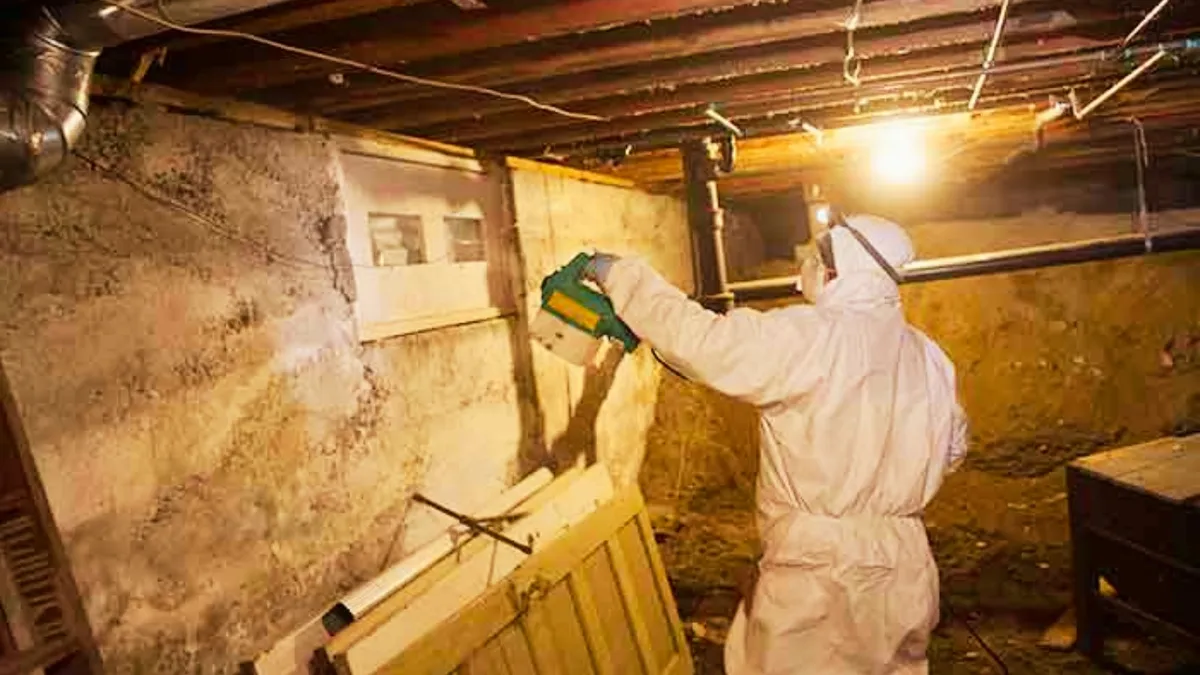
Crawl Space Mold Removal in Santa Fe
Crawl spaces are one of the most common places for mold to develop undetected. Poor ventilation, ground moisture, and limited access mean mold can spread for months before it's noticed — often first through a musty smell inside the home above. That holds true for homeowners and businesses in Santa Fe, Texas as much as anywhere else in the state.
Our technicians handle this work across Santa Fe regularly. Crawl space mold removal targets this hard-to-reach area specifically, combining mold removal with moisture control measures suited to the unique conditions found under a home.
Sustained humidity is the defining feature of this region for restoration work, more than any single storm. That is part of what shapes how we approach crawl space mold removal for properties in Santa Fe and the rest of Galveston County.
Our line for Santa Fe is staffed around the clock, every day of the year. Damage that starts at 2am gets the same response as damage that starts at 2pm.
We start every Santa Fe job the same way, by understanding what actually happened and telling you plainly what it will take to put it right.
What To Do Right Now
The steps that limit damage, and the reactions that commonly make it worse.
Do This Now
- Check whether the crawl space access hatch or vents are letting in standing water or surface runoff
- Look at where downspouts discharge, since water released at the foundation line ends up under the house
- Note whether the musty smell inside is strongest near floor vents or in rooms over the affected area
- Photograph any visible growth on joists, subfloor, or insulation if you can do so safely from the access point
- Check for plumbing leaks under the house, since a weeping drain line feeds growth continuously
- Keep the crawl space access closed so spores are not drawn up into the living space while you arrange assessment
Avoid Doing This
- ×Do not enter a crawl space with visible growth without protective equipment, since disturbing it in a confined space produces heavy spore exposure
- ×Do not install plastic sheeting over wet ground without addressing drainage first, which traps water against framing
- ×Do not seal crawl space vents as a standalone fix, because closing ventilation without a moisture control strategy can make conditions worse
- ×Do not spray bleach or consumer foggers on joists and subfloor, which does not reach growth within the wood and adds moisture to the space
- ×Do not leave wet or fallen insulation in place, as it holds water against the subfloor and keeps the material damp
- ×Do not assume the smell will clear once the weather dries out, since the growth remains and returns with the next humid stretch
How To Tell You Need This Service
Problems This Service Solves
These are the problems a Santa Fe property tends to develop when crawl space mold removal is put off, and each one costs more to resolve than the one before it:
- Mold growth on floor joists and subflooring
- Musty odors traveling up into the living space
- High humidity and poor ventilation in the crawl space
- Standing water or ground moisture feeding mold growth
- Potential structural wood damage over time
When You Need This Service
We hear from Santa Fe homeowners and businesses when situations like these come up, often without much warning:
- A musty odor is noticeable inside the home with no obvious source
- Visible mold is found during a crawl space inspection
- The crawl space has a history of moisture or flooding
- Ventilation or vapor barrier issues are suspected
What Happens While You Wait
Damage progresses on its own schedule. This is roughly how it unfolds.
Growth Starts on Wet Wood
Once joists and subfloor reach sustained moisture content, growth can establish within roughly 24 to 48 hours. In a dark, still, enclosed crawl space, conditions stay favorable continuously rather than drying out between events.
Odor Reaches the Living Space
The stack effect draws crawl space air upward into the house, and the musty smell becomes noticeable indoors well before anyone has looked underneath.
Insulation and Subfloor Degrade
Insulation absorbs moisture, loses R-value, and falls away from the subfloor. Growth spreads across joists and sheathing, and the affected area expands to much of the crawl space footprint.
Structural Decay
Sustained moisture leads to wood decay in joists, beams, and subfloor, which moves the problem from remediation into structural repair. Wood-destroying insects are also drawn to consistently damp framing.
The honest answer on timing is that it depends on what the inspection finds. A contained problem at a Santa Fe property can be worked through in a few days. Damage that reached subfloor, wall cavities, or multiple rooms takes longer, and we would rather tell you that after seeing the property than guess high or low on the phone.
Our Process in Santa Fe
Here is what our technicians typically do once they arrive at a Santa Fe property, step by step rather than skipping ahead:
- 1
Crawl Space Inspection
Our technician assesses mold growth, moisture levels, and ventilation conditions in the crawl space.
- 2
Containment
The area is contained to prevent spores from spreading into the home during removal.
- 3
Mold Removal
Affected wood and surfaces are cleaned or treated to remove mold growth.
- 4
Moisture Control
Vapor barriers, ventilation improvements, or drainage solutions are addressed to reduce future risk.
The Equipment We Bring
Equipment choice follows the inspection, not the other way around. At a Santa Fe property our technicians measure first, using moisture meters and thermal imaging to establish how far the problem has traveled, then bring in extraction, drying, filtration, or containment equipment sized to what the readings show. Over-equipping a small job wastes your money and under-equipping a large one leaves damage behind.
What's Included
When you call for crawl space mold removal in Santa Fe, Texas, here is what is included, with no surprise add-ons once the work is underway:
- Crawl space mold removal
- Treatment of affected wood framing
- Moisture control recommendations
- Odor treatment
Crawl Space Mold Removal in Santa Fe, Texas
Santa Fe is part of Galveston County in Texas's Gulf Coast region. Proximity to the Gulf means this part of Texas sees tropical storm and hurricane remnants more often than inland areas. Even storms that stay offshore can dump enough rain to overwhelm drainage and flood low-lying properties, and the region's humidity keeps materials from drying on their own afterward.
Our coverage extends across Galveston County, including League City, Texas City, Dickinson, Friendswood. The same licensed technicians handle every call regardless of which community it comes from.
The water table sits high across much of the Gulf Coast, and flat terrain gives runoff very little anywhere to go. Many homes across Texas, particularly older construction, are built on pier-and-beam foundations with crawl spaces that are prone to humidity buildup in the state's hot, moisture-heavy climate — making crawl space mold a common, recurring issue for Texas homeowners.
Property Types We Serve in Santa Fe
Homes, rentals, offices, retail space, and multi-tenant buildings in Santa Fe are all within scope. What changes between them is access, scheduling, and who signs off on the work. Our technicians handle the coordination side of that so you are not the one relaying messages between a property manager, a tenant, and an adjuster.
Our Service Area Around Santa Fe
City limits do not define where we work. A Santa Fe address and an address several miles outside it are handled the same way, because dispatch runs on technician availability and travel distance rather than on which municipality the property happens to sit in. That matters in Galveston County, where a good share of properties are outside any city boundary.
Who Shows Up at Your Property
Licensing and insurance are the floor, not the selling point. What actually separates a good outcome from a mediocre one at a Santa Fe property is judgment: deciding what can be dried in place versus what has to come out, reading the structure well enough to find where the damage traveled, and knowing when the readings say the job is genuinely finished. Our technicians do this work full time, which is where that judgment comes from.
Working With Your Carrier
Most Texas policies cover sudden, accidental damage and exclude long-term seepage and deferred maintenance, which is why the cause of loss gets documented carefully before any work starts. Our technicians handle that documentation as part of the job at no extra step for you, and we will explain plainly what your carrier is likely to consider. For a Santa Fe property, it is worth confirming with your agent whether flood or sewer backup endorsements apply, since those are frequently separate.
How We Keep You Informed
You should not have to chase us for an update. Our technicians working in Santa Fe give you an arrival window rather than an open-ended wait, explain findings in plain language instead of trade shorthand, and confirm the plan with you before moving past the assessment stage. Rescheduling a follow-up takes one call.
Why Santa Fe Chooses Us
The reason most Santa Fe calls come to us is availability paired with accountability. The line is answered at any hour, the technician who arrives works for us rather than for a subcontractor we found that morning, and the person who assessed your property is the one accountable for how the job finishes.
We would rather lose a job than win it with a number we cannot hold to. For Santa Fe property owners that means an honest scope after an actual inspection, no pressure to approve work on the spot, and documentation detailed enough that a second opinion would reach the same conclusion.
Because we handle crawl space mold removal as a core part of our business rather than an occasional job, our Santa Fe technicians have seen the full range of how this kind of damage plays out in Texas homes and businesses, which helps them move efficiently instead of working it out as they go.
Nearby Areas We Serve
The same crews that cover Santa Fe also work in the communities around it:
Other Services We Provide in Santa Fe
Mold Remediation
Certified mold remediation to safely remove mold colonies and address the moisture source in Texas homes and businesses. We handle this across Santa Fe and the surrounding area.
Mold Inspection & Testing
Professional mold inspection and testing to identify hidden mold growth and air quality issues in Texas properties. Available for Santa Fe properties as well.
Santa Fe Crawl Space Mold Removal FAQ
Why is mold so common in crawl spaces in Santa Fe?
Crawl spaces often have limited airflow, ground moisture, and consistent warmth — ideal conditions for mold growth, especially in humid climates.
How do I know if I have mold in my crawl space?
A persistent musty smell inside the home, especially near floor vents, is a common early sign worth having inspected.
Does crawl space mold affect indoor air quality?
Yes — air from the crawl space can circulate into the home through the "stack effect" or HVAC systems, potentially affecting indoor air quality.
Can crawl space mold be prevented?
Proper ventilation, vapor barriers, and moisture control significantly reduce the risk of mold returning after remediation.
How long does crawl space mold removal take?
Typically a few days, depending on the size of the crawl space and extent of mold growth.
Do you provide crawl space mold removal in Santa Fe, Texas?
Yes, Santa Fe is inside our service area. Licensed, insured technicians handle crawl space mold removal there and the rest of Galveston County, any day of the year.
How quickly can a technician reach my property in Santa Fe?
We dispatch as soon as we understand the situation. Exact timing depends on current call volume and your specific location, so we give you a realistic window on the call rather than a blanket promise.
Do you also serve areas near Santa Fe, like League City?
League City, Texas City, Dickinson, Friendswood are all inside our coverage area, along with the smaller communities between them.
Are your Santa Fe technicians licensed and insured?
They are. Licensing and insurance are confirmed before a technician is assigned to any Santa Fe job, and you are entitled to see that documentation on request.
What should I do before your technician arrives in Santa Fe?
Stop the source if you safely can, stay out of rooms with sagging ceilings or standing water near outlets, and photograph the damage for your claim. We walk you through anything else specific to your situation while you are still on the phone.
Is there a fee just to have someone look at my Santa Fe property?
We provide a free estimate as part of the initial visit. You will know the plan and scope before any work begins, with no obligation to proceed if you would rather get a second opinion.
Do you work on commercial properties in Santa Fe, or just homes?
Homes and businesses alike. The method is the same; what changes is scheduling, access, and the documentation standard a commercial carrier expects.
What if the damage at my Santa Fe property is worse than expected?
Hidden damage is the norm rather than the exception in this work. Any expansion of scope gets explained and approved before the work happens, and the readings behind that decision are documented for you and your adjuster.
Whatever stage you are at with this, calling gets you a clear picture rather than a sales pitch. We will tell you what we think you are looking at, what it would take to address it, and whether it needs attention today or can reasonably wait. For a Santa Fe property, that conversation is free and carries no obligation.
Crawl Space Mold Removal in Santa Fe, Texas
A licensed, insured technician, a free estimate, and a plain explanation of what comes next for your Santa Fe property.
Call Now — (866) 370-1338